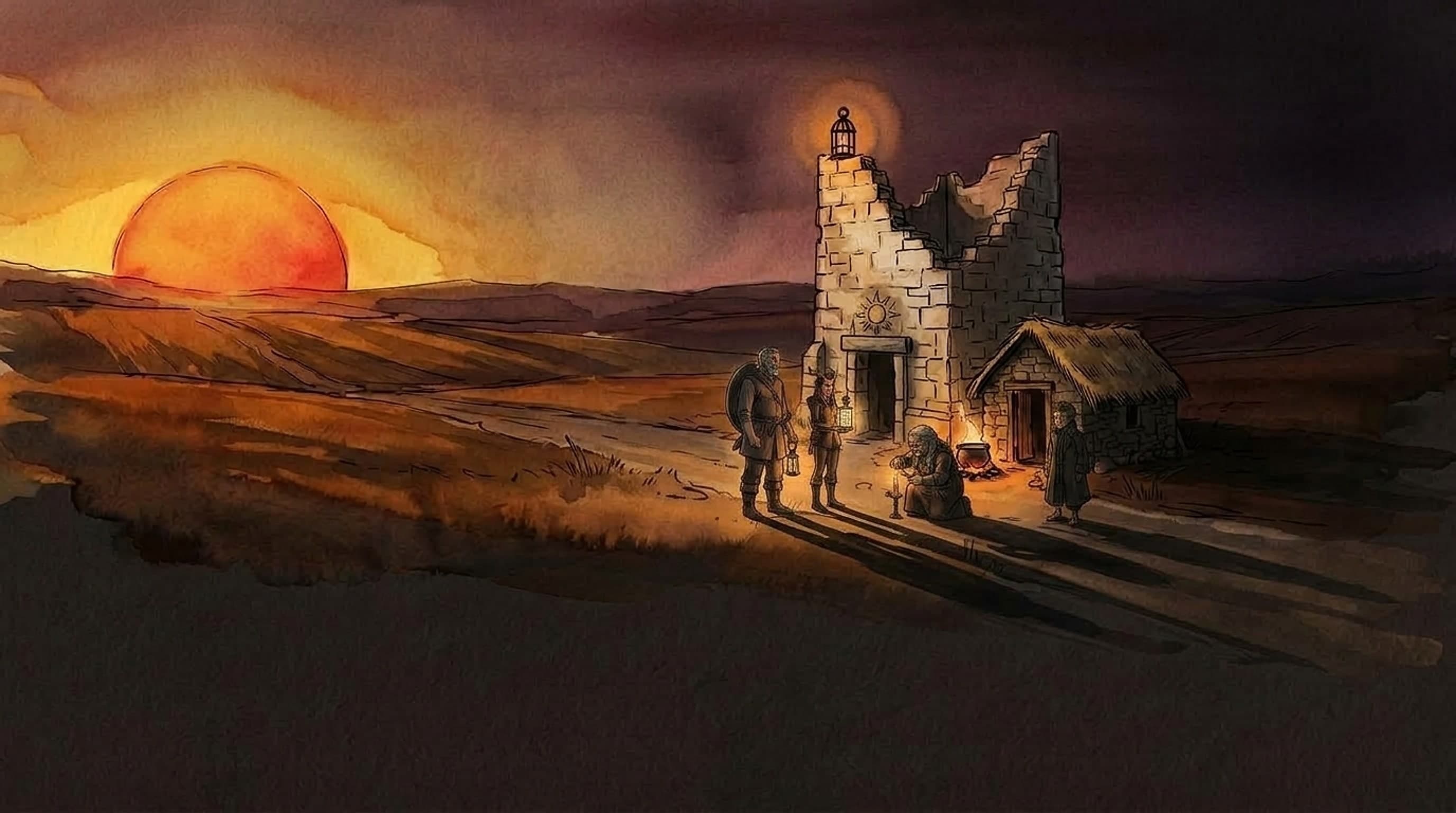
Your friends. Your heroes.Our world.
Hand-written adventures, told out loud at one table. Explore every corner, try anything, and leave your mark on a story that remembers.
About 10 minutes. Bring friends, or play alone.
One screen for the table. One phone per player.
The big screen is the DM. Your phone is you. Nothing private ever appears where the whole room can see it.
- 01
One screen for the table, a phone each
Open the table screen on a laptop or TV: the scene, the map when a fight starts, and the story spoken aloud. Each player scans the code on it with their phone to sit down.
Nobody plays through the big screen. It has no buttons.
- 02
Your phone is your hand
Your hero, your dice, your secrets. What your hero notices, and a private line to the DM, arrive on your phone and never on the big screen.
One hero per phone. The game enforces it.
- 03
Say what you do. The DM answers aloud.
The table listens to the room. Hold the button on your phone when you speak to the DM, and the words are yours. Rolls the DM asks of you arrive on your phone alone.
Hold your button mid-sentence and the DM stops to listen.
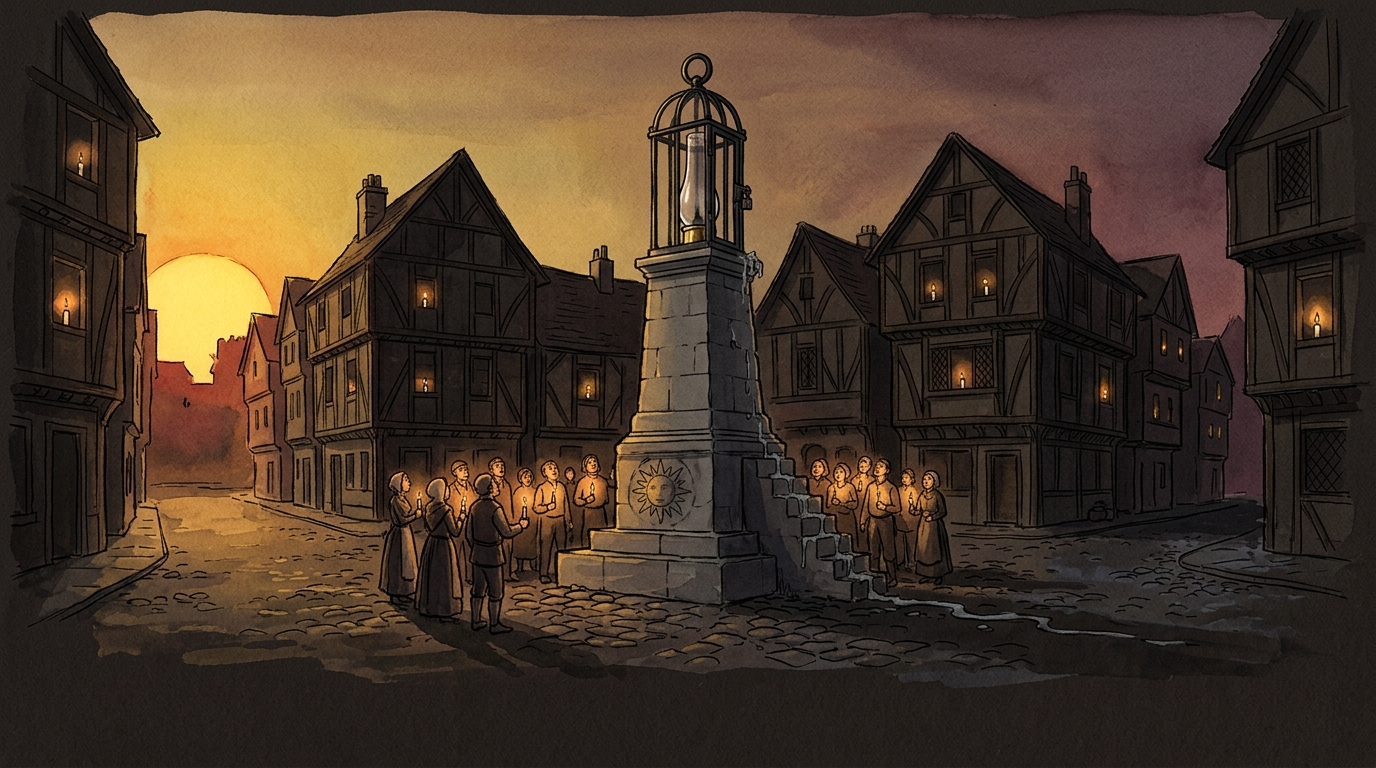
Everything a good DM does at the table, without the one friend who has to do it.
Prep, rules, voices, maps and secrets. The parts that make a session feel run rather than read out.
“Stay on your feet. Give me an Acrobatics check.”
Narrates for the ear
Every line is written to be spoken, not read. Short sentences, no dice arithmetic out loud, distinct voices for the innkeeper and the thing in the cellar. The words appear on screen as the voice reaches them.
Runs the rules
It calls for the right check at the right difficulty, applies your modifiers and armour class, tracks conditions and initiative, and knows whose turn it is. When it asks your hero for a Perception check, only your phone asks you to roll. Every danger shows itself before it strikes. The dice that can kill you are rolled by the game, not the storyteller.
Draws the scene
A place is described once and remembered forever. The tactical grid appears only when position matters, and a fight opens with words before the board fills in, one combatant at a time as each is named.
Keeps secrets
Your phone knows things the others don’t: what your hero notices, remembers or fears. Say it aloud, or keep it. Whisper to the DM from your phone and the answer comes back to your phone. Enemies in ambush stay off the board until the fiction reveals them.
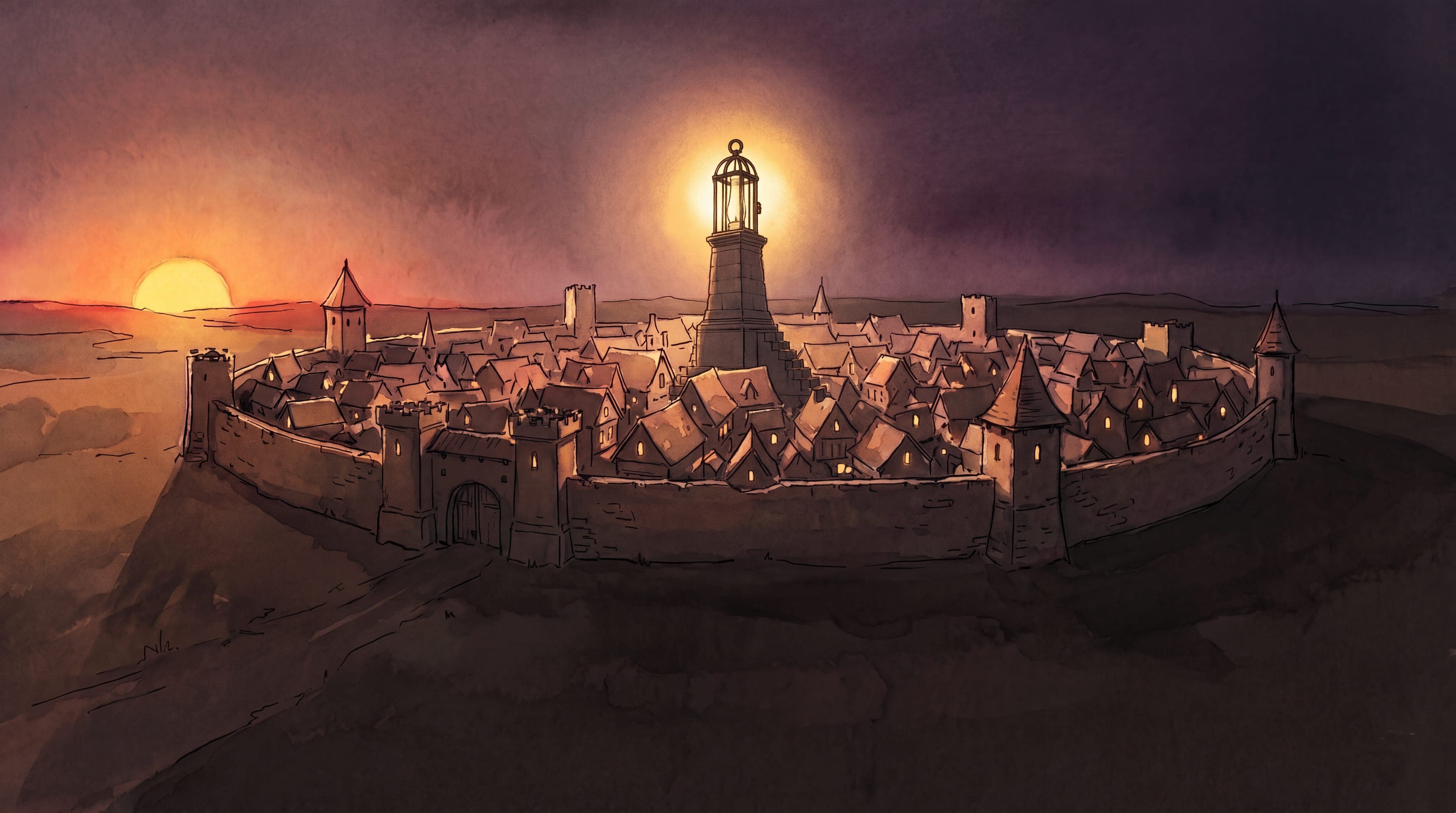
The first world: the Evenlands
The sun has been setting for three hundred years.
Swear an oath at a roadside lamp, walk east toward a town going dark, and find out what you swore to.
Fall, and the lamp you swore to will catch you. Not forever.
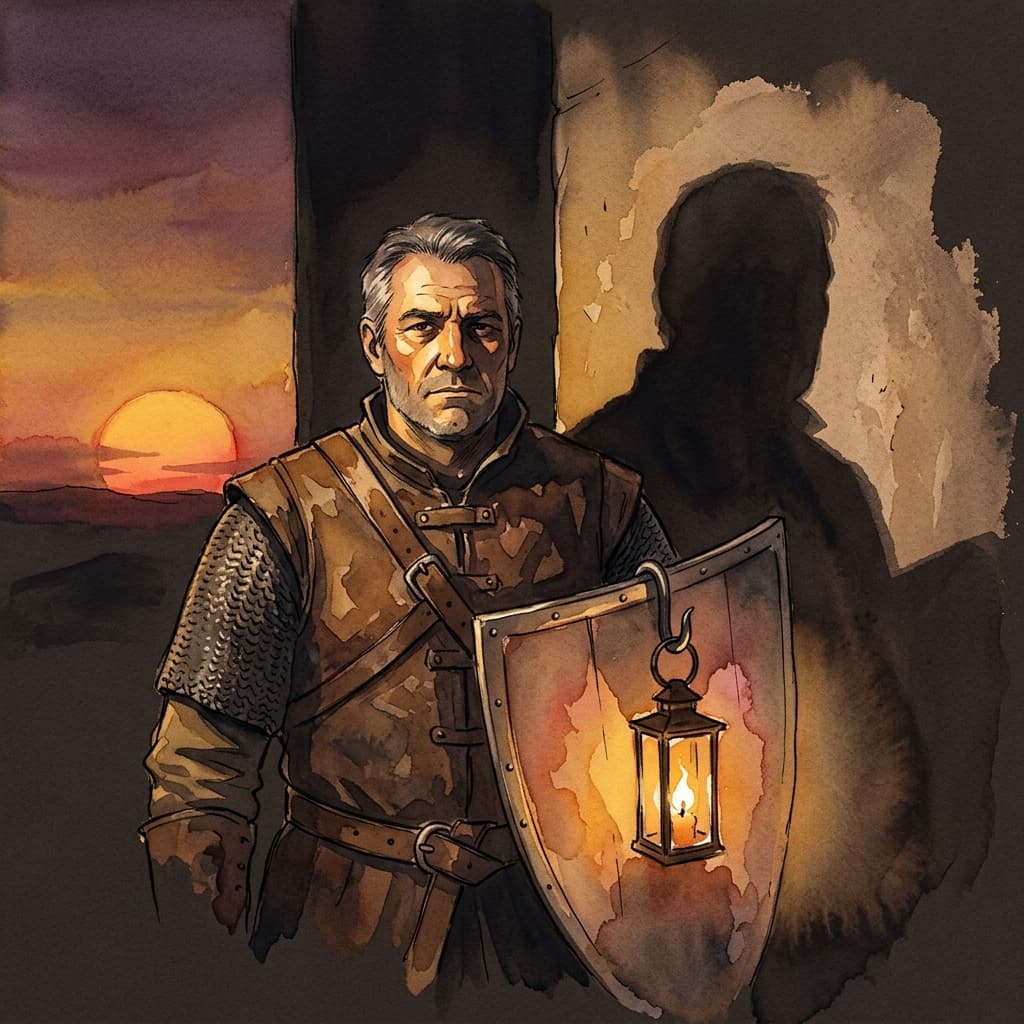 Hesk LanthornHuman · Fighter
“Stay behind the light. I’ll tell you when to bring it forward.”
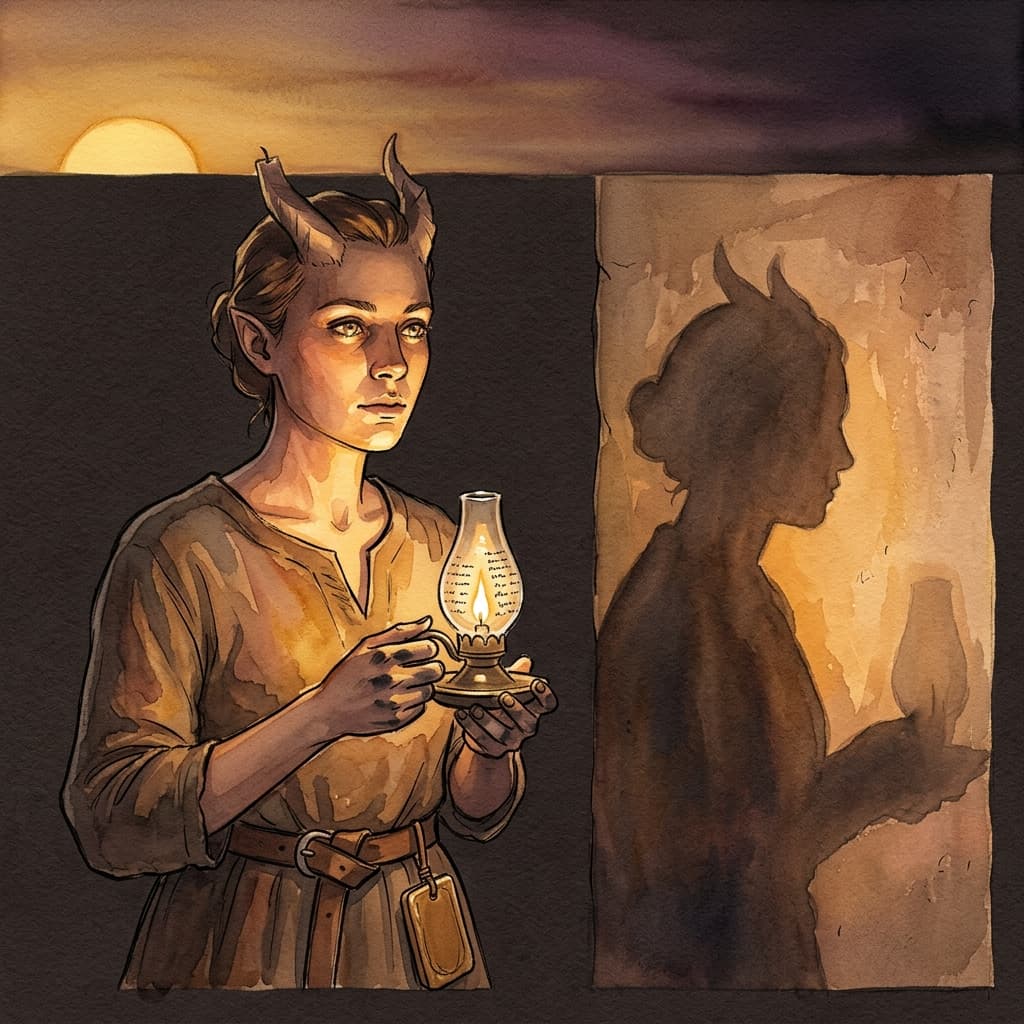 Tamsin CandlewrightDuskborn · Wizard
“Light does what it’s told, if you ask in the right order.”
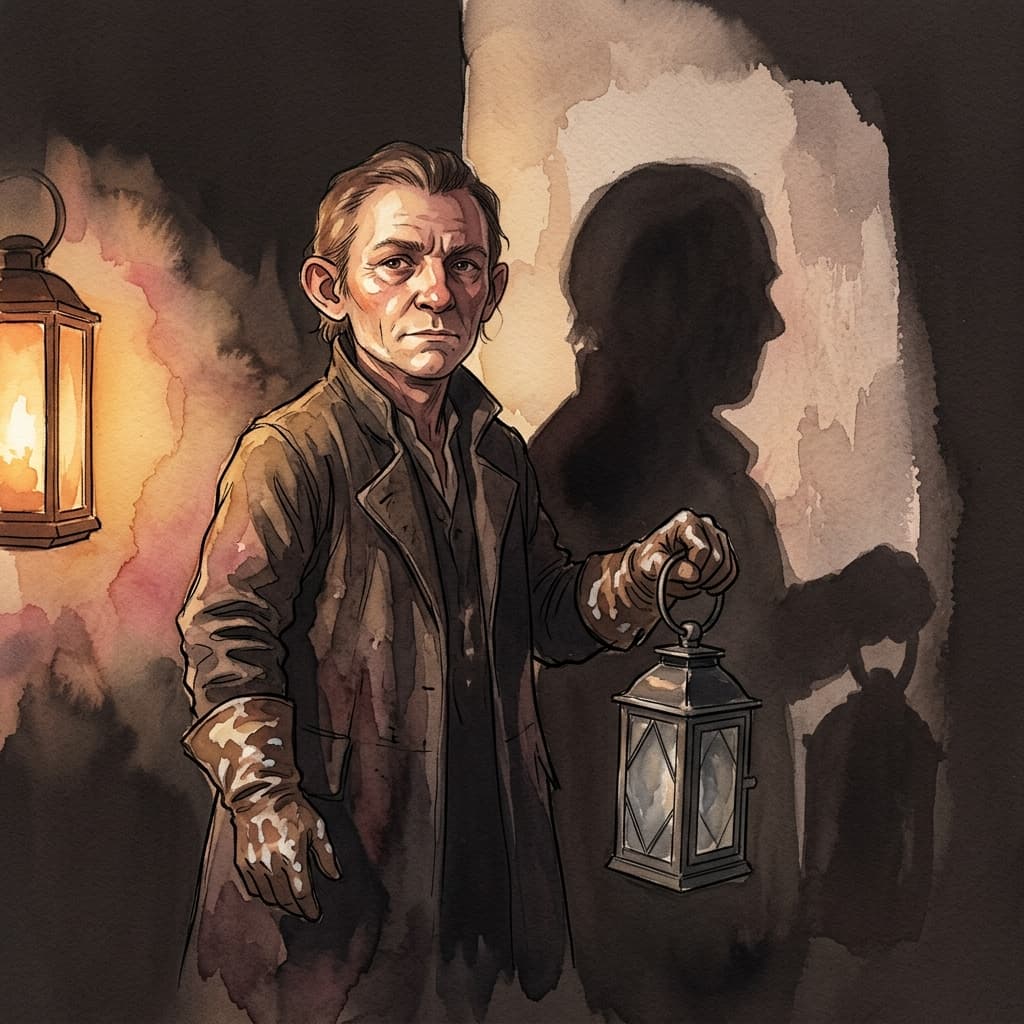 Ancel FlintHalfling · Rogue
“Every lamp in this town has a dark side. I’ve slept on most of them.”
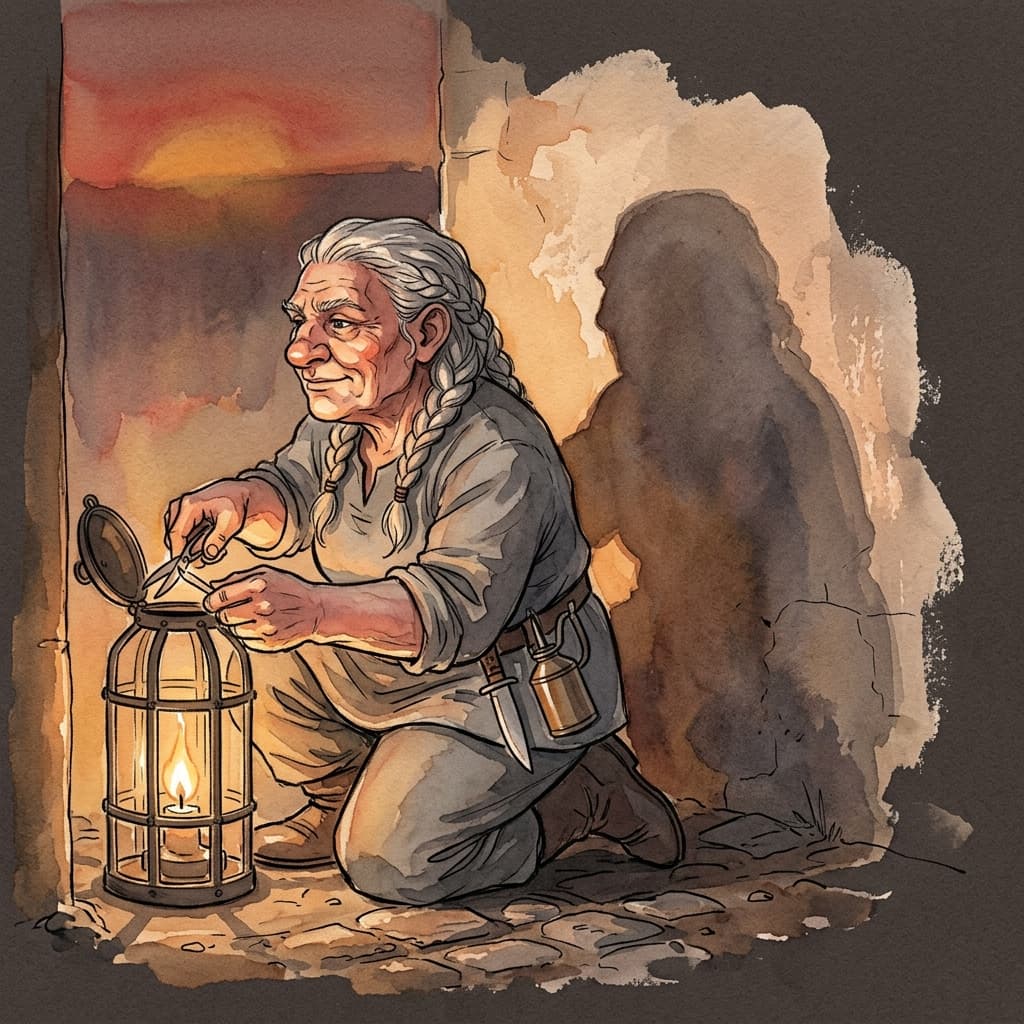 Edda TrimmerDwarf · Cleric
“Trim the wick, feed the oil, say the name. That’s the whole of my faith.”
Four of the people you might be in the Evenlands. Pick one when your table starts, or make your own.
The Evenlands is the first world. It won’t be the last.
Try for freeThe people of Tallowgate.
Tallowgate is the first town on your road: a candle-town at the edge of the dark. Eldrin narrates, and everyone you meet there has a voice of their own. Press one to hear it.
One subscription seats the whole table.
The host pays. Everyone else scans the code and plays free, on their own phone.
Wandering Party
For parties that gather when they can.
$9a month- Sessions
- About 2 a month
- Players
- Up to 6, free
- Per player, party of five
- $1.80 a month
- Most Popular
Weekly Table
The standing Thursday game.
$19a monthor $204 a year- Sessions
- About 4 a month
- Players
- Up to 6, free
- Per player, party of five
- $3.80 a month
Play past your month's sessions and the table keeps going for up to half a month more, at no extra charge, on a lighter version of the same voices. A session that has started always finishes, even mid-fight. After that, the host can add a Session Pass or wait for the month to turn. The balance is shown to the host, never on the table screen.
The things people ask before the first session.
A free scene of about 10 minutes, backstage, minutes before the curtain goes up: one room, one locked chest, one very small fight. You learn every way of playing by trying it. No account needed.
Yes. The rehearsal and the Evenlands both play with one hero or with four. Alone, you still have the table screen and your phone, and you can type instead of speaking.
No. Your friends scan the code on the table screen, pick a hero and sit down. Only whoever pays for the table needs an account.
One screen with speakers and a microphone for the table, such as a laptop or a TV with a laptop behind it, and a phone for each player on the same Wi-Fi. Everything runs in the browser. There is nothing to install.
Yes. Share the table screen on your call, and each player scans its code with their phone. Speak to the DM with your phone’s buttons: the table only hears the room it’s in.
The world’s rules are enforced by the game: health, dice, deaths, rests. They are never left to the storyteller’s memory. Underneath are the open numbers of the System Reference Document 5.1, so if you’ve played tabletop roleplaying games before, a sheet will feel familiar. The story is improvised. The arithmetic is not.
The table screen listens; phones never do. What it hears is shown on the screen so everyone can see what the DM heard, and the microphone can be muted at any time. Table talk about pizza does not become a plot point. Things said directly to the DM do.
No. The host pays and everyone else joins free by scanning the code. The rehearsal is free. When the Evenlands opens, Wandering Party is $9 a month for about 2 sessions and Weekly Table is $19 for about 4, which is under $4 each for a party of five. A $5.99 Session Pass covers one evening with no subscription. Play past your month’s sessions and you get up to half a month more at no charge, and a session that has started always finishes.
No. Each rehearsal is anonymous, and it’s cleared within three weeks. We keep only anonymous totals. Saved heroes and campaigns come with accounts, when the Evenlands opens.
The table is set. The DM is already in the room.
Come to rehearsal first. Then carry your light into the Evenlands.